
online short course
Exploring Teamwork
Discover the psychology behind great teams and the strategies that help them perform.

Difficulty
Beginner
Duration
3 hours 10 minutes
Language
English
Accredited
Yes
About the course
Great teamwork doesn’t happen by accident. It’s built through understanding, trust, and the everyday behaviours that turn a group of capable people into a team that consistently delivers more than the sum of its parts.
This course gives you the foundations to build, contribute to and lead high-performing teams. You’ll explore the psychological and relational dynamics that shape how teams behave, and develop the core skills that great teamwork depends on, from building trust and managing conflict to active listening and setting the kind of group norms that bring out everyone’s best.
You’ll learn through interactive activities, quizzes and case studies designed to help you apply what you’ve learned in your own teams. On completion, you’ll earn a certificate endorsed by the Agile Business Consortium to add to your professional portfolio.
Learning outcomes
Understand what makes teams high-performing
Evaluate your own experience of teamwork and identify the characteristics that define effective teams.
Build trust within teams
Recognize the role of strong interpersonal relationships in team performance, and apply practical strategies to build trust.
Navigate group dynamics
Apply theories of group formation and development, including unspoken influences and informal roles, to enhance team performance and avoid common pitfalls.
Recognize your own contribution
Reflect on your role within a team, identify the behaviours that help or hinder team performance, and develop your own practice as a team member or leader.
Who is it for?
- Team members and developers
- Team leaders
- Project managers
- Agile coaches
- Scrum Masters
Curriculum
1.01 Welcome to the course
1.02 How to navigate this course
1.03 Activities and quizzes
1.04 Types of discussion
1.05 Further reading and references
1.06 Your dashboard
1.07 Gaining your certificate
1.08 Getting help
1.09 Please introduce yourself
1.10 Let’s get started!
2.01 Introducing working in teams
2.02 Defining a team
2.03 How do you feel about working in a team?
2.04a Bureaucratic vs agile teams
2.04b Case study: Menlo Innovations
2.05 Teams behaving badly
2.06 Dealing with team dysfunction
2.07 Exploring conflict in teams
2.08 Destructive conflict
2.09 Constructive conflict
2.10a Identifying different types of conflict
2.10b ‘Check Your Understanding’ – Types of conflict
2.10c ‘Check Your Understanding’ – Kilmann Model
2.11 Key takeaways
2.12 Progress check
2.13 What’s coming up next?
3.01 Exploring relationships within teams
3.02 How team size impacts relationships
3.03 Think and reflect on your team size
3.04 Assessing the quality of team relationships
3.05 The quality of your work relationships
3.06 Building meaningful work relationships
3.07 Developing trust and respect
3.08 The Five Seeds of Trust Infographic
3.09 How much do you trust your colleagues?
3.10 Trust in virtual teams
3.11 Taking the risk to trust
3.12 ‘Check Your Understanding’ – Trust
3.13 How do you feel about taking the risk to trust?
3.14 Communication in teams
3.15a Reflective listening
3.15b Becoming a reflective listener
3.16 Curiosity and the art of asking questions
3.17 ‘Check Your Understanding’ – Schein
3.18 Emotional intelligence
3.19 Building your self-awareness
3.20 Key takeaways
3.21 Progress check
3.22 What’s coming up next?
4.01 Introducing group dynamics
4.02 Group dynamics and the power of “the group”
4.03 The evolution of a team
4.04 What stage is your team at?
4.05 Group norms – the unspoken influences within a team
4.06 Identifying your team norms
4.07 Harmful norms
4.08a Groupthink
4.08b Case study: The Bay of Pigs
4.09 Challenging harmful norms
4.10 Exploring team roles
4.11 Identifying your role
4.12 Creating your own Team Charter
4.13 Key takeaways
4.14 Progress check
4.15 What’s coming up next?
5.01 Course Summary
5.02 About the End-of-Course Quiz
5.03 End-of-Course Quiz
5.04 Thank you for taking this course!
5.05 End of Course Survey
5.06 Congratulations
Gain a Recognized Course Certification
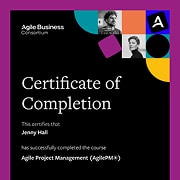
Upon successful completion, you’ll receive a digital certificate from the Agile Business Consortium, globally recognized by employers and professional bodies.
Access all 15+ courses for just £165/year
Enjoy unlimited access to CPD-certified content, join exclusive monthly networking events, and benefit from a premium library of resources and practical templates.
Related courses





Frequently Asked Questions
Our online courses are part of Individual Membership, so you’ll need to be a member to access them. Membership gives you the full library of courses alongside resources, events and our communities, all for £165 a year. You can become a member and start learning straight away.
The course is self-paced, so you can work through it whenever suits you and take as long as you need. Your access continues for as long as your membership is active, so there’s no pressure to finish by a set date.
No. Our courses are designed to be accessible whatever your background. Each course has a difficulty level (Beginner, Intermediate or Advanced) so you can choose what’s right for you, but there are no formal prerequisites to enrol.
Yes. On completing the course, you’ll earn a certificate endorsed by the Agile Business Consortium to add to your professional portfolio and share with your network or employer.
Each course is fully online and self-paced, made up of a mix of video lessons, practical activities, case studies and quizzes. You can learn at your own pace, on any device, wherever you are.