
online short course
Communication & Collaboration
Build the skills to communicate clearly and collaborate effectively in agile environments.

Difficulty
Intermediate
Duration
3 hours 45 minutes
Language
English
Accredited
Yes
About the course
In agile environments, where work is shaped by rapid change and shifting priorities, the ability to communicate clearly and work well with others is essential. True collaboration takes more than good intentions. It needs a real understanding of how teams work, sharp communication skills and a shared commitment to common goals.
This course equips you with the knowledge, tools and insights to raise the bar on how you and your organization connect and collaborate. You’ll explore the fundamentals of effective communication, dig into the dynamics that shape team performance, and learn how to identify and engage the right stakeholders at the right moment.
The result is more aligned teams, better decisions and the kind of collaboration that actually moves work forward.
Learning outcomes
Understand the value of genuine collaboration
Define what real collaboration looks like in team environments and why it matters.
Support and develop high-performing teams
Apply collaborative principles to build the conditions for teams to do their best work.
Recognize and overcome barriers
Identify the things that get in the way of effective collaboration and apply practical strategies to address them.
Use techniques that drive better outcomes
Apply advanced techniques to enable problem-solving and decision-making in collaborative contexts.
Who is it for?
- Middle and senior managers
- Project and product leads
- Aspiring agile coaches
Curriculum
1.01 Welcome to the course
1.02 How to navigate this course
1.03 Activities and quizzes
1.04 Types of discussion
1.05 Further study and references
1.06 Your dashboard
1.07 Gaining your certificate
1.08 Getting help
1.09 Please introduce yourself
1.10 Let’s get started!
2.01 Introducing collaboration
2.02 What does collaboration mean?
2.03 Defining collaboration
2.04 A collaborative environment
2.05 A collaborative ecosystem
2.06 Team roles and diversity
2.07 Activity: Building cognitive diversity
2.08 Collaboration and group dynamics
2.09 Collaboration and learning
2.10 The power of curiosity
2.11 Check your understanding – Types of questions
2.12 Psychological contracting
2.13 Setting team objectives using OKRs
2.14 Key takeaways
2.15 Progress check
2.16 What’s coming up next?
3.01 Introducing building a collaborative team
3.02 Stakeholder management
3.03 Activity: Creating stakeholder maps
3.04 Clarifying roles using RACI Charts
3.05 Activity: Creating RACI Charts
3.06 Building team relationships
3.07 Emotional intelligence and collaboration
3.08 Designing collaborative sessions
3.09 Activity: Applying Gibb’s Reflective Cycle
3.10 Key takeaways
3.11 Progress check
3.12 What’s coming up next?
4.01 Introducing challenges to collaboration
4.02 Collaborating in virtual and hybrid teams
4.03 Siloes: Killing collaboration
4.04 Check your understanding on… Siloes
4.05 The power of listening
4.06 Decoding non-verbal communication
4.07 Collaborative mindsets
4.08 Activity: The left-hand column
4.09 Managing team conflict
4.10 The collaboration overload trap
4.11 Intentional collaboration
4.12 Key takeaways
4.13 Progress check
4.14 What’s coming up next?
5.01 Introducing empowering collaboration
5.02 Leading collaboration
5.03 Hidden roles and team dynamics
5.04 Cultural awareness and collaboration
5.05 Check your understanding on… Culture Mapping
5.06 Collaborative creativity
5.07 Design thinking
5.08 Case study: Design thinking at Netflix
5.09 Activity: Apply Design Thinking
5.09 Activity: Apply Design Thinking
5.09 Activity: Apply Design Thinking
5.12 What’s coming up next?
6.01 Introducing creating collaborative environments
6.02 Collaborative cultures
6.03 Motivation and collaboration
6.04 Activity: A collaboration checklist
6.05 Inter-group collaboration
6.06 Inter-team learning
6.07 Inter-organisational collaboration
6.08 Case study: Co-opetition with Apple and Samsung
6.09 Human-machine collaboration
6.10 Collaborating in a VUCA world
6.11 Key takeaways
6.12 Progress check
6.13 What’s coming up next?
7.01 Course Summary
7.02 About the End-of-Course Quiz
7.03 End-of-Course Quiz
7.04 Thank you for taking this course!
7.05 End of Course Survey
7.06 Congratulations
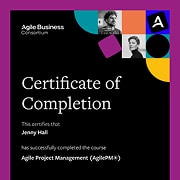
Gain a Recognized Course Certification
Upon successful completion, you’ll receive a digital certificate from the Agile Business Consortium, globally recognized by employers and professional bodies.
Access all 15+ courses for just £165/year
Enjoy unlimited access to CPD-certified content, join exclusive monthly networking events, and benefit from a premium library of resources and practical templates.
Related courses





Frequently Asked Questions
Our online courses are part of Individual Membership, so you’ll need to be a member to access them. Membership gives you the full library of courses alongside resources, events and our communities, all for £165 a year. You can become a member and start learning straight away.
The course is self-paced, so you can work through it whenever suits you and take as long as you need. Your access continues for as long as your membership is active, so there’s no pressure to finish by a set date.
No. Our courses are designed to be accessible whatever your background. Each course has a difficulty level (Beginner, Intermediate or Advanced) so you can choose what’s right for you, but there are no formal prerequisites to enrol.
Yes. On completing the course, you’ll earn a certificate endorsed by the Agile Business Consortium to add to your professional portfolio and share with your network or employer.
Each course is fully online and self-paced, made up of a mix of video lessons, practical activities, case studies and quizzes. You can learn at your own pace, on any device, wherever you are.