
Competence vs Competency
When leaders of the Consortium decided that they’d like to champion business agility worldwide, they realised that being able to apply and encourage business agility is independent of any industry that a person might work in.

When leaders of the Consortium decided that they’d like to champion business agility worldwide, they realised that being able to apply and encourage business agility is independent of any industry that a person might work in. It’s also more than holding a qualification related to business agility, because professionals need to be able to adapt theories to suit their practice.
You may know that the origins of the Consortium are in project management, but 3 decades later, “being agile” doesn’t only apply to how a project is managed. Careers that were traditionally based on strict rules and deadlines have broken free, such as accounting, HR and marketing.
Both inside and outside of academia, the difference between “competence/ competences” and “competency/ competencies” is confusing, with no universally agreed definition, so here’s how we use those words:
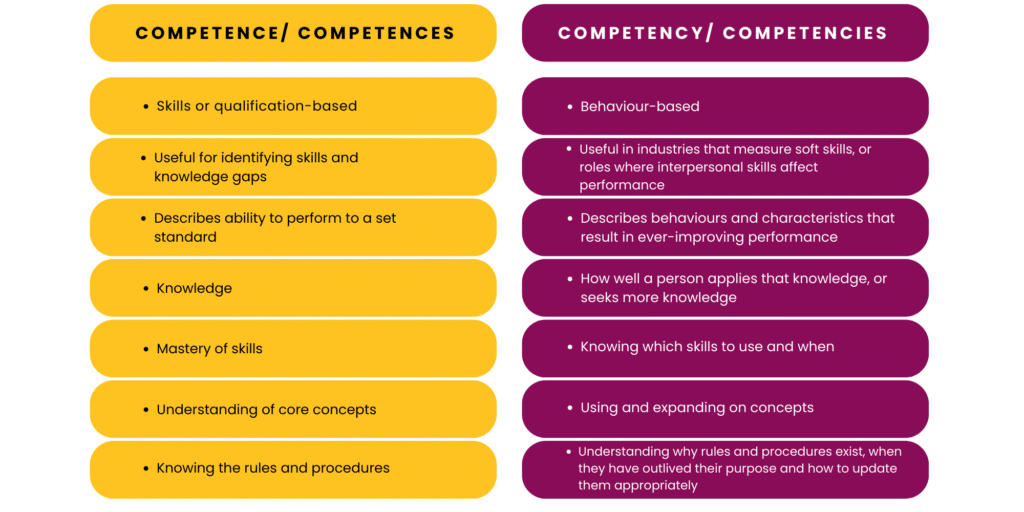
In general, competence is what you do and competency is how well you do it. You could have high competence in the sense that you can carry out a skill very well, but not have the curiosity to think about where else that skill could be used, or consider whether that skill could become obsolete.
The reason that businesses have become interested in competencies rather than purely focussing on competences, is that it’s expensive to replace staff. If someone has competencies that would contribute to growth, but no opportunities to use them, they tend to leave for a more interesting job, so an important part of HR strategy is trying to engage and retain staff with a combination of skills and behaviours that offer the greatest benefit to the organisation.
The Consortium’s Competency Framework took the competences and competencies that someone needs to use business agility and separated them from any particular industry, so they could be applied to every organisation that has asked “what competences and competencies do we need, to make ourselves more agile?” If someone matches the competencies on the framework, it differentiates them from someone who has a qualification touching on business agility, but hasn’t had a chance to apply it.
If you’re an individual working in an organisation that hasn’t tried to improve its ability to be flexible or proactive yet, you can look at the framework and identify what you already know and what you can learn next, to make it happen.
It’s useful when preparing for performance reviews or job interviews. As you read through the competencies, consider some examples of challenges or day-to-day work that you dealt with. What happened and how you handled it are important details, but the part many interviewees forget is explaining their reasoning. The decision-making process gives an indication of competencies that bare facts can’t.
If you’re in charge of transforming an organisation and want to do a skills (competences) audit, the framework adds a layer of competencies to help you assess which team members have the right attitude and only need reskilling.
If you’ve had a look at the framework and identified some competencies you’d like to work on, Consortium members have access to a wealth of resources to support them.
We also host a range of events for subscribers and members, at introductory, intermediate and advanced levels, which you can find here.
Written by

Become a Member
Join today for exclusive member events, expert insights, practical resources and a global network of agile practitioners.
Not ready for membership?
Register for free to access selected content, follow upcoming events and get a feel for the Agile Business Consortium community.
Related blogs






Ready to lead change?
Join the Agile Business Consortium today. Unlock premium resources, network with global leaders, and certify your expertise.